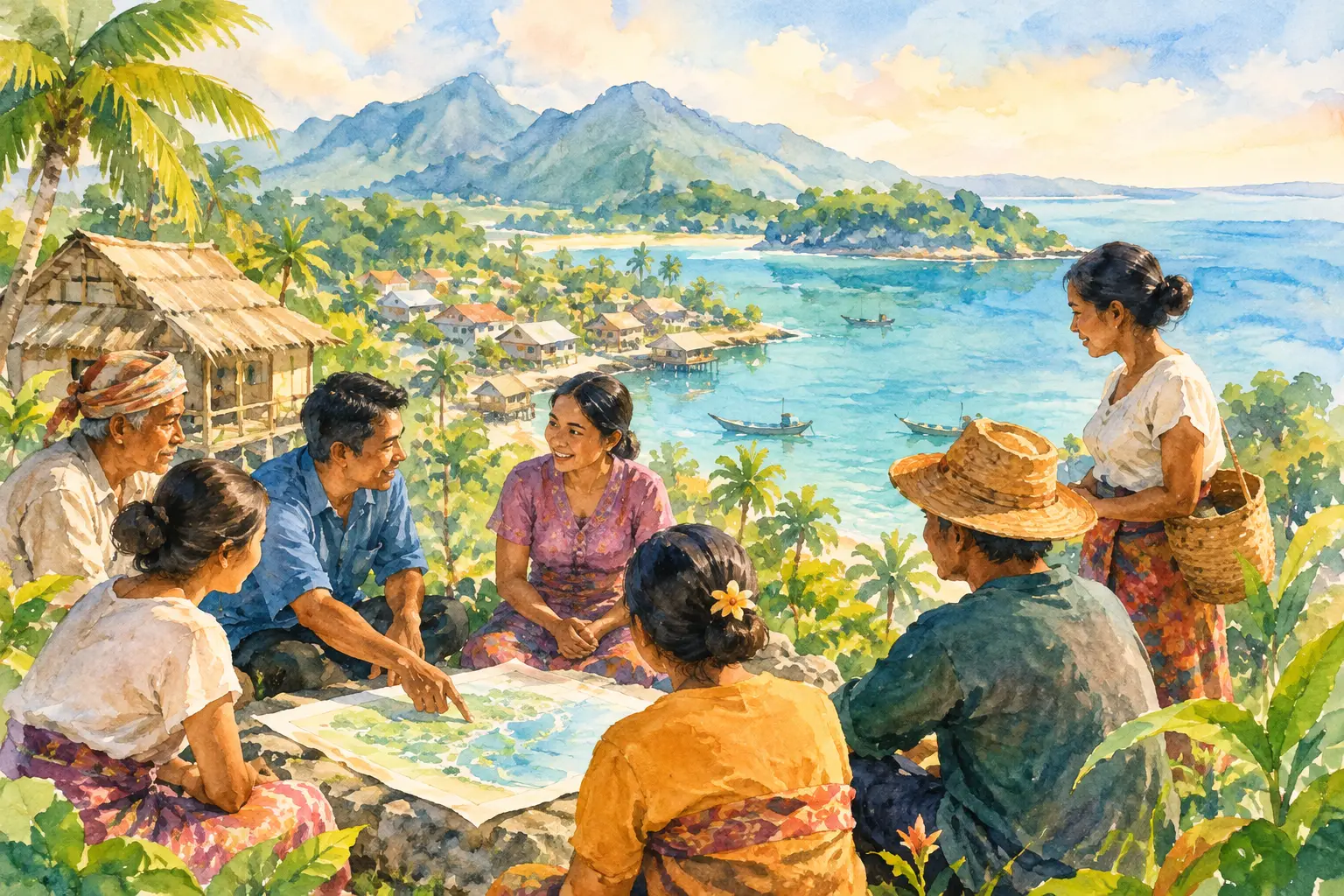
Who Owns Community Assets? A Case for Local Stewardship

A health center opens its doors in a rural village. A café begins purchasing produce from nearby farmers. A culture center gives young people a place to learn language, music, and history from their elders. The question of who owns community assets may sound administrative, but it determines whether these gains become a foundation for local hope or another project that disappears when outside funding moves on.
For communities across the Pacific Rim and beyond, ownership is not simply about whose name appears on a deed. It is about authority, responsibility, access, and the right to shape the future of a place. When land, buildings, enterprises, and cultural resources are held and governed in ways that honor local people, development can strengthen dignity instead of creating dependence.
Who Owns Community Assets?
The honest answer is often: it depends on the asset, the law, the community’s traditions, and the purpose of the project. A community asset can include physical property, such as a clinic, school, water system, farm, guesthouse, or gathering space. It can also include less tangible but equally vital resources: cultural knowledge, local leadership, relationships, environmental health, and the reputation of a community enterprise.
Legal ownership is one part of the picture. In some places, land may be held by families, a cooperative, a charitable entity, a trust, a village body, or the government. A building may be funded by donors while operated by local leaders. An enterprise may need outside investment at its beginning while creating a clear path toward local equity and decision-making over time.
What matters is that the arrangement is transparent and serves the community’s long-term wellbeing. A project built on land without clear consent or recognized use rights can create conflict, even when its intentions are generous. A business managed entirely from a distant office may produce revenue but fail to build local capability. By contrast, a carefully designed partnership can protect the investment, meet legal obligations, and steadily place greater authority in the hands of the people who live with the results.
Ownership Is More Than a Deed
A deed can establish legal title. It cannot, by itself, create belonging. Community stewardship asks broader questions: Who makes decisions about the asset? Who benefits from its income? Who maintains it? Who has access? Who can raise concerns when something is not working?
Consider a small eco-resort in Fiji or an opportunity center in Cambodia. If local residents are only hired as low-wage staff while outside partners retain all control of profits, pricing, and direction, the asset may bring short-term employment without changing the community’s economic position. If local leaders help govern the enterprise, local people are trained for management roles, and a defined share of proceeds supports community priorities, the same project can become a durable source of opportunity.
This does not mean every asset must be individually owned by every resident. Collective ownership can be valuable, but it also requires strong governance. Family ownership can protect accountability, yet it may exclude others if agreements are unclear. Nonprofit ownership can safeguard a charitable mission, but only if the nonprofit listens closely to local leadership. The best model is not identical everywhere. The best model is one that is lawful, understandable, accountable, and rooted in genuine local participation.
Cultural assets require special care
Some assets should never be treated as commodities. Traditional arts, stories, ceremonial practices, language, ecological knowledge, and sacred places belong within the life of a people. Visitors, donors, and partners can support their preservation, but support must not become extraction.
A culture center in Thailand, Nepal, or Malaysia can provide space for teaching, archives, performances, and local enterprise. Yet its purpose should be shaped by the people whose heritage it represents. Communities should decide what may be shared publicly, what must remain protected, how images and recordings are used, and where any income flows.
Respecting cultural authority is not a barrier to development. It is a safeguard against building prosperity at the cost of identity. Communities with living cultural roots often carry a stronger sense of purpose, belonging, and resilience through seasons of change.
Why Ownership Shapes Lasting Development
When people have a meaningful stake in the assets around them, they are more likely to care for them, improve them, and teach the next generation how to lead them. This is practical stewardship, not sentiment.
A clinic needs more than donated equipment. It needs a sustainable operating plan, trusted staff, supply relationships, maintenance funding, and local confidence. A literacy program needs more than books. It needs educators, family engagement, and a home within the community. A ranch or agricultural project needs more than fertile land. It needs fair access to markets, sound land care, and a plan for who carries responsibility through drought, growth, and succession.
Outside generosity can help begin this work. It should not become the only force capable of sustaining it. The goal is not to withdraw care from communities facing real hardship. The goal is to pair compassionate support with pathways toward local strength.
This is why mission-driven development must consider both charitable and economic assets. Donations can meet urgent needs and establish vital services. Revenue-generating enterprises can help fund maintenance, wages, expansion, and community-led priorities. Neither approach is sufficient alone in every circumstance. Together, they can create room for communities to move from receiving help to directing hope.
What Responsible Partners Should Look For
Donors, investors, and nonprofit partners have a meaningful role in shaping ownership well. Before supporting a project, look beyond the construction plan or moving story. Ask whether local leaders were involved before the project was designed, not only after it was announced. Ask how land rights, permits, and community consent have been addressed. Ask who will govern the asset five and ten years from now.
It also helps to examine how financial benefit will move. Will a hospitality venture purchase locally? Will profits help sustain a health initiative, scholarships, or cultural programming? Are local employees being prepared for leadership and ownership roles? Is there a realistic reserve for repairs, difficult seasons, and future growth?
Transparency protects everyone. It protects the community from promises that cannot be fulfilled. It protects supporters from funding structures they do not understand. It protects the mission by making responsibilities visible before conflict arises.
Through the Veil approaches development through this wider lens: body, soul, and spirit; service and enterprise; people and land. A health center, culture space, café, educational initiative, or restored landscape carries more than a budget line. Each can become a place where local gifts are recognized, livelihoods are strengthened, and hope takes practical form.
Shared stewardship does not mean absent accountability
Local leadership and clear standards belong together. A community-centered project still needs sound bookkeeping, measurable goals, legal compliance, maintenance plans, and safeguards against misuse. In fact, accountable structures make local ownership more credible and more durable.
External partners may at times retain a temporary governance role, particularly when a project requires large capital, specialized expertise, or protection during its early years. That can be responsible if the purpose, limits, and transition plan are clear. Problems arise when temporary control quietly becomes permanent control, or when communities are asked to carry responsibility without receiving real authority or resources.
Healthy partnership names these tensions honestly. It creates agreements that can be reviewed, leaders who can be heard, and pathways for local people to grow into greater responsibility.
A Better Question for Every Project
Instead of asking only, “Who paid for this?” ask, “Who will be strengthened by this for generations?” That question changes how a school is designed, how a business is financed, how land is restored, and how success is measured.
The most hopeful community assets are not monuments to outside generosity. They are living places of service, work, worship, learning, and cultural continuity. They help families imagine a future without requiring them to leave behind their identity, their land, or their voice.
When considering where to give, partner, or invest, seek projects that treat local stewardship as a beginning rather than a final report. Support the patient work of building agreements, training leaders, honoring culture, and creating income that stays close to home. That is how an asset becomes more than a building or a business. It becomes a shared inheritance of dignity and possibility.


Comments